Kindai Univ.
Architectural Planning Lab.

Project.3
cultural landscapes
Passing on a fishing town’s everyday scenery
Nakatosa / 2024-
■ POINT
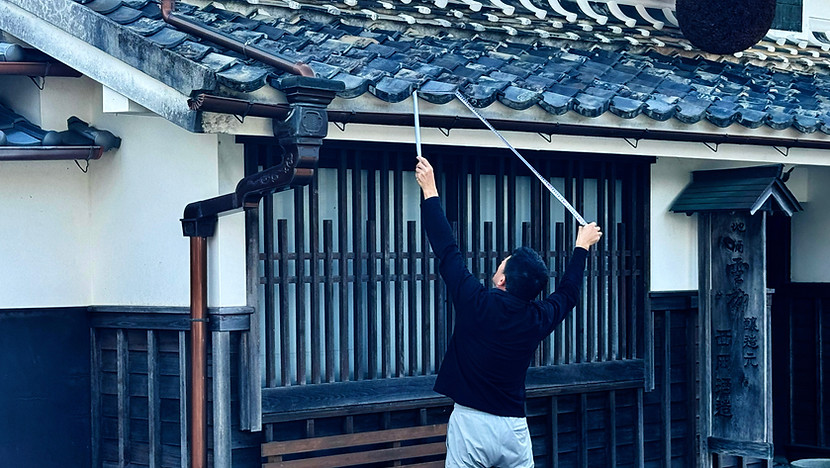
Kure in Nakatosa, Kochi, known for pole-and-line bonito fishing, was designated in 2011 as an Important Cultural Landscape of Japan, “The Landscape of Kure Port and Fishing Town.” More than ten years after the designation, revising the landscape plan has become an issue. We survey the townscape, Taishomachi Market and the former charcoal warehouses, and use measured surveys and interviews to read how the port town took shape through the overlap of fishing, commerce and timber shipping. We pay particular attention to how people’s activities create the landscape, as in the market’s daidashi stalls and the “Mejika Box.” Since 2026 we have also been running participatory workshops to draw out what makes Kure “Kure” in residents’ own words.
■ Background and question
More than ten years after the designation, the Kure district needs to revise its landscape plan, especially how it understands the townscape and the structure of the area. Taking part in surveys by the NPO Shinkawa-Tagomori Environmental Heritage Conservation Society, we have been comprehensively organizing the landscape of the Kure district and its background.
How can residents’ “everyday scenery” be written into a conservation plan and handed on to the next generation of caretakers? This is the question of our research.
■ Three areas for reading the port town
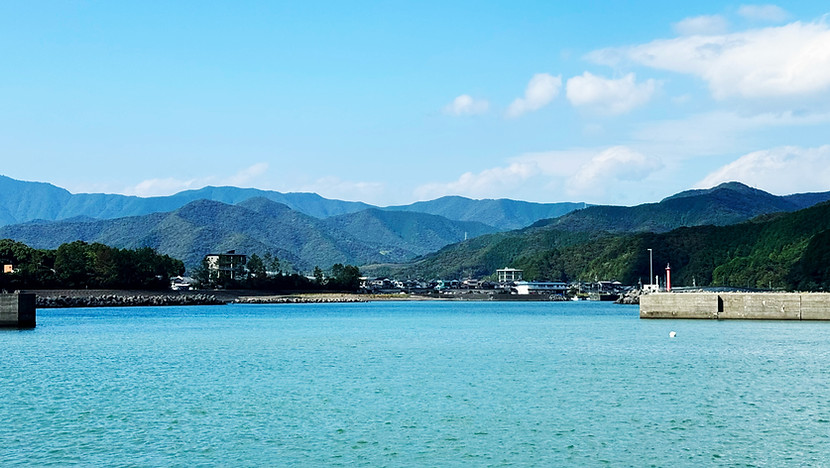
At first glance Kure is a typical fishing town, but fishing, commerce and transport have long flourished side by side here, and that overlap shows in the town’s structure.
Honmachi-dori: A former merchants’ quarter where old townhouses stand on long, narrow plots.
The fishing quarter: A dense district on the high ground along the bay, shaped by the lives of fishing families.
The timber-port warehouses: In the south of town stand warehouses from the days when Kure was a shipping port for timber and charcoal.
We also conduct analyses of the district’s characteristics based on literature and data, land-use surveys, townscape surveys and building surveys.
■ Survey of Taishomachi Market
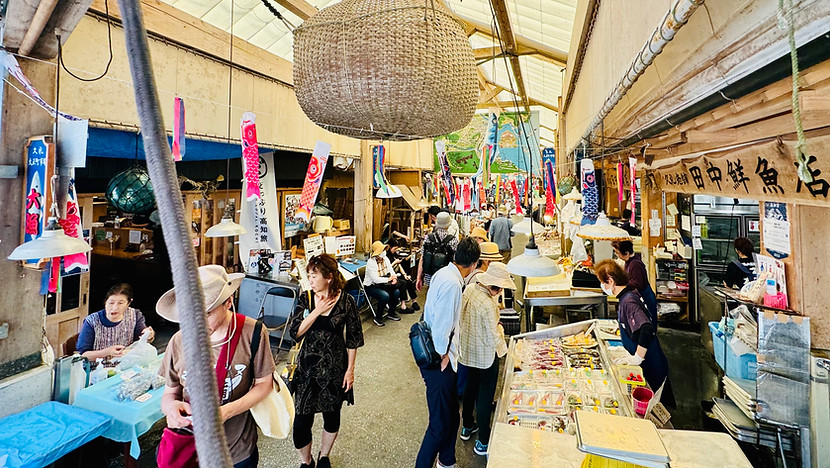
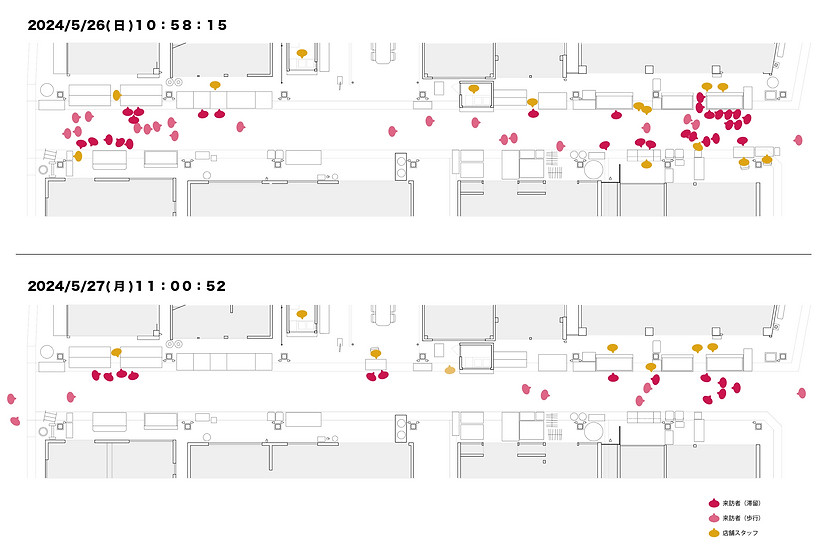
We measured the arcade of Taishomachi Market and the buildings along it to study their structure and spatial composition. We also interviewed shop owners, recorded how fixtures and goods are arranged, and used time-lapse video to track the movement of visitors over a set period.
■ Taishomachi Market
Taishomachi Market began in the Meiji era as simple stalls where fishermen’s wives sold and bartered the small fish their husbands brought home. After a great fire in 1915, it was rebuilt with a donation from Emperor Taisho, and the market street was named “Taishomachi.”
The market is known for its daidashi culture, in which other vendors set up stalls in front of the permanent shops. You can buy bonito from a famous shop and homemade pickles from a local resident in the same place.
When a revision of the Food Sanitation Act made it difficult to prepare sashimi outdoors, the market devised the “Mejika Box,” a small enclosed stall that hygienically preserved the “live” experience of seeing fish filleted in front of you. Such accumulated ingenuity sustains the market’s liveliness.
■ The timber-port warehouses
For a time in the modern era, Kure was an important hub of the timber industry. Timber and charcoal cut in the mountains of the upper Shimanto River were carried over steep mountain passes to Kure’s port, and this industry greatly transformed the southern part of the town.
A government timber yard was established, and dozens of charcoal warehouses lined the shore, storing fuel before it was shipped to Osaka and other big cities. Many of these warehouses with black timber walls still stand, conveying the era when Kure was a timber port.
Loading was done by dockworkers called okinakashi, many of whom were women, including many fishermen’s wives, which suggests that the townspeople took on several kinds of work.
■ Life in the fishing quarter
To protect itself from the sea, the fishing quarter was built as a dense cluster of narrow alleys and houses on top of a natural coastal embankment. The small wooden rowing boats of the Meiji era gave way to motorized boats that could chase bonito far offshore, and the harbor expanded from an anchorage at the river mouth into a modern port.
Walking the alleys, you notice many soto-nagashi, sinks and taps placed outside the houses. Everything from cleaning fish to washing vegetables happens here, blurring the line between house and street. Such details reveal the town’s deep connection with the sea.
■ Resident workshops (2026)
In collaboration with the Nakatosa Board of Education, we are holding a series of three resident workshops from September to December 2026. In the first, participants talked about their favorite places and memorable scenes. In the second they will walk the town together, and in the third they will summarize issues for revising the conservation plan.
In the questionnaire at the first workshop (11 valid responses), 9 participants said they knew well that Kure is designated as an Important Cultural Landscape, while their understanding of what the system involves varied. The favorite places they named were everyday scenes such as the inner harbor, alleys, the embankment and Taishomachi Market rather than famous sights.
■ For companies and local governments
We welcome inquiries about lectures on cultural landscapes and on landscape-based community development that carries residents’ everyday scenery forward. Drawing on our surveys and resident workshops in Kure, we explain perspectives for revising conservation plans for Important Cultural Landscapes.
■ Publications
Ryuhei Hashida, Shigetomo Kikuchi, Ruiko Temma, Wakana Kikuchi, Ryotaro Urai: Urban formation and cultural landscape of the port town of Kure (Part 1): Focusing on modern timber transport routes and timber-related facilities, Journal of Architecture and Planning (Transactions of AIJ), Vol. 90, No. 836, pp. 2131–2140, October 2025 (in Japanese)